CayoCasa Travel Guide · Puerto Rico
From the flower festival valleys of Aibonito to the ancient caves of Utuado — Puerto Rico's mountainous heart is wild, lush, and breathtakingly beautiful.
Scroll to Explore
Barranquitas
The "Cradle of Patriots" — cloud forests, cascading waterfalls & cool mountain air
Utuado
Gateway to the Taíno ceremonial site & home to the island's most dramatic karst landscape
Aibonito
Puerto Rico's "City of Flowers" — cool highland air, famous festival & scenic Cañón de San Cristóbal
Cayey
Mountain university town with panoramic Cordillera views, roadside lechón & crisp highland air
One of the most significant pre-Columbian sites in the Caribbean, located in Utuado. The ceremonial ball courts — or bateyes — are still ringed by ancient monoliths carved with Taíno petroglyphs, surrounded by lush mountains that have changed little in 800 years.
Puerto Rico's deepest canyon — over 700 feet of sheer cliffs draped in tropical vegetation with a river rushing below. Often called the "Grand Canyon of Puerto Rico," it's one of the island's most dramatic and undervisited natural wonders.
A stunning reservoir cradled by the karst mountains of Utuado, accessible only by free government ferry. The boat ride itself is an adventure — gliding between green limestone mogotes with no roads in sight. Local restaurants line the far shore.
Barranquitas is known as the "Cradle of Patriots" — birthplace of statesman Luis Muñoz Rivera. The town's compact historic plaza, Casa Museo, and the misty mountain scenery surrounding it make for a perfect half-day of cultural exploration.
Every June and July, Aibonito transforms into a riot of color for Puerto Rico's most beloved annual festival. Outside of festival season the town's gardens, flower farms, and cool mountain plazas are perfect for a relaxed highland afternoon.
One of the highest points on the island's main highway, the Mirador offers sweeping panoramic views across the Cordillera Central in both directions. On a clear day you can see both the north and south coasts simultaneously — a genuinely breathtaking sight.
"The center of Puerto Rico isn't just geography — it's the island's ancient soul, still breathing."
Barranquitas sits at the heart of Puerto Rico's most waterfall-rich terrain. Trails lead to Doña Juana Falls, La Coca, and hidden cascades deep in the Toro Negro Forest. The cool mist, fern-draped cliffs, and total jungle silence make these hikes unforgettable.
Walk the ancient bateyes of Caguana ceremonial park, where Taíno chiefs gathered for rituals and ball games centuries before Columbus arrived. Petroglyphs carved into the surrounding monoliths depict deities and ancestors still watching over the valley.
Board the free government-run ferry at Utuado and glide across the reservoir between towering karst mogotes. The round trip takes about 30 minutes and deposits you at a cluster of open-air restaurants serving fresh lake fish and cold Medallas.
For adventurous visitors, guided canyoning tours descend into Aibonito's spectacular canyon via ropes, river crossings, and cliff traverses. The canyon floor — accessible only on foot — is a world of hanging vines, crystal pools, and complete wilderness.
Puerto Rico's most beloved annual event runs every June and July, turning Aibonito into an explosion of orchids, anthuriums, and tropical blooms. Live music, local food, artisan crafts, and tens of thousands of visitors make this a bucket-list Puerto Rico experience.
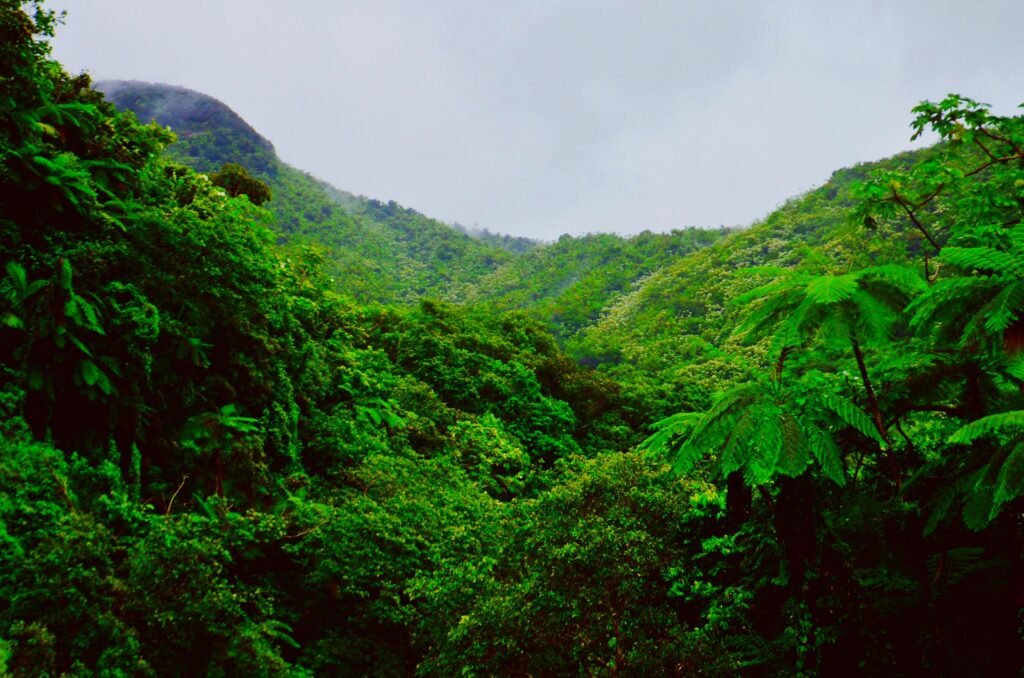
The Toro Negro Commonwealth Forest spans several municipalities and sits atop the island's highest peaks. Home to the endangered Puerto Rican parrot and dozens of endemic bird species, the misty trails here feel more like Costa Rica than a Caribbean island.
The Guavate strip along Route 184 in Cayey is Puerto Rico's most legendary food destination. Over a dozen lechoneras line the mountain road, each slow-roasting whole pigs over wood fire from dawn. San Juaneros drive an hour each way just for this. Go hungry and go early — the best cuts sell out by noon.
Pasteles de Masa
The mountain version of this Puerto Rican classic uses green banana masa stuffed with seasoned pork and wrapped in banana leaves. The central region makes the island's most traditional pasteles.
Sancocho de Montaña
A hearty mountain stew of root vegetables, corn, and slow-cooked meat — the ultimate comfort food when the cloud forest cools to 65°F. Every family has a recipe passed down for generations.
Mountain-Grown Coffee
The Cordillera Central produces some of Puerto Rico's finest coffee alongside Yauco. Look for locally roasted blends from Utuado and Barranquitas — rich, bold, and nothing like what you'll find at sea level.
Alcapurrias & Roadside Frituras
Pull over at any roadside kiosk in the central mountains and you'll find fresh alcapurrias, bacalaítos, and piononos frying in giant calderos. The mountain versions are heartier and more flavorful than their coastal cousins.
Guineos en Escabeche
Green bananas pickled with olives, onions, and olive oil — a mountain staple that turns up as a side dish with almost every meal. Simple, tangy, and deeply Puerto Rican.
The most famous lechonera on the Guavate strip, open since the 1960s. Arrive before 11am to secure a table and choose from whole-roasted pork, morcilla, and all the traditional sides while a live band plays salsa in the background.
Accessible only by ferry, this open-air waterfront restaurant serves the freshest freshwater fish on the island alongside cold beer and mountain views. The chillo frito and rice with gandules here are as good as it gets in central Puerto Rico.
Perched dramatically at the edge of a cliff overlooking the canyon, La Piedra is Aibonito's most iconic dining experience. Traditional Puerto Rican mountain cuisine with views that will stop you mid-bite. Reserve ahead on weekends.
Best Time to Visit
The mountains are beautiful year-round but June–July brings the Aibonito Flower Festival. December–February offers the coolest, crispest air — bring a light jacket. Avoid heavy rain season (September–October) when mountain roads can flood.
Getting Around
A rental car is essential — public transport barely exists in the central mountains. PR-52 connects San Juan to Cayey in 50 minutes. From there, PR-14 and PR-10 wind through the interior. Allow extra time — mountain roads are narrow and scenic.
Guavate Lechón Timing
The Guavate strip is busiest on Sundays — arrive by 11am to beat the crowds and secure a table. Most lechoneras sell out of the best cuts by 1–2pm. The strip is quieter on weekdays but many spots are only open on weekends.
Weather & Clothing
Central mountain towns sit at 1,500–3,000 feet elevation. Temperatures average 65–75°F year-round — noticeably cooler than coastal Puerto Rico. Afternoon cloud cover and mist are common. Always bring a layer and rain jacket.
Canyon & Waterfall Safety
The Cañón de San Cristóbal and mountain waterfalls require proper footwear and ideally a local guide. Flash flooding can occur during and after heavy rain. Check conditions with local outfitters before attempting canyon trails independently.
Lago Dos Bocas Ferry
The free government ferry at Utuado runs Thursday–Sunday, departing every 1–2 hours from the dock on PR-123. The last return ferry runs around 6pm. Call ahead (787-894-3275) to confirm current schedule — it can vary seasonally.
Day Trips from the Center
The central mountains are ideally positioned for exploring the whole island. San Juan is 60–90 minutes north, Ponce 45 minutes south, Arecibo Observatory (30 min northwest), and Rio Camuy Caves (45 min west) are all excellent day trips.
Vacation Rentals vs. Hotels
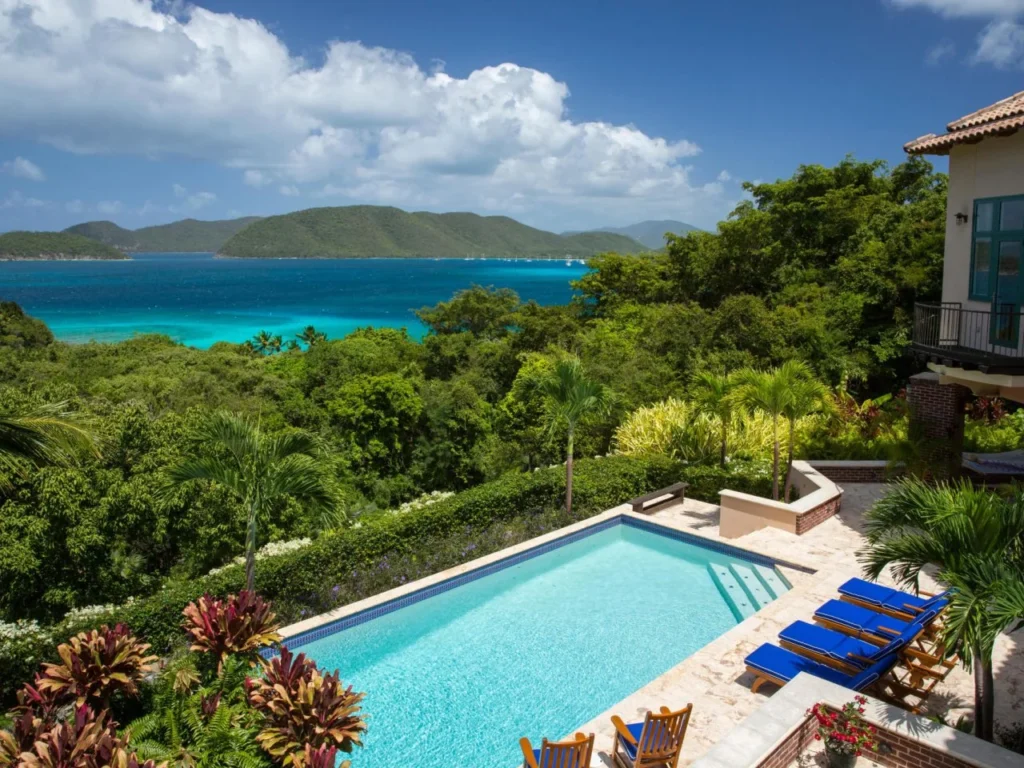
Hotels are scarce in the central mountains — this is vacation rental territory. Mountain cabins and villas in Barranquitas, Aibonito, and Utuado offer the most authentic experience, with cool air, jungle views, and the sound of coquís at night.
Plan Your Stay
Browse handpicked vacation rentals across Barranquitas, Utuado, Aibonito, and Cayey — your perfect base for everything this guide covers.
Browse Rentals at CayoCasa